


 Tiếng Việt
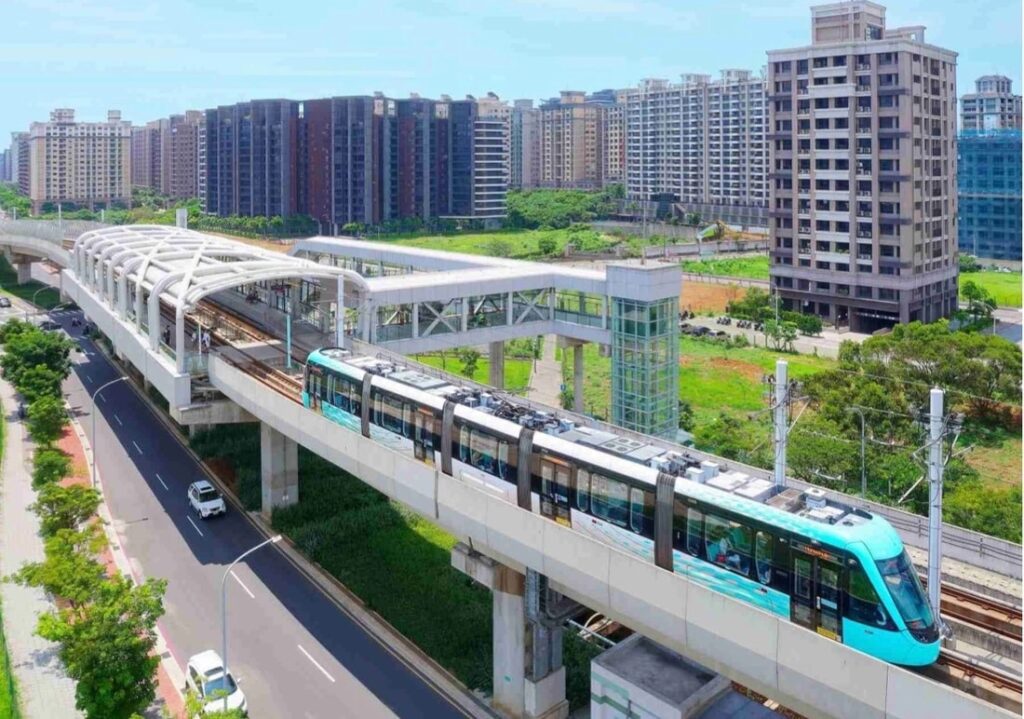
Da Nang has identified the development of urban railways as the backbone of its smart transport network.
Da Nang prioritizes developing an urban railway line connecting the international airport with Hoi An. Graphic by the municipal Department of Transport.
According to its planning orientation, Da Nang’s urban railway system will connect such local key locations as the free trade zone, financial center, Lien Chieu Seaport, airport, Hoi An, Tam Ky, and Chu Lai.
Under the plan, the city aims to develop 16 urban railway routes with a total length of more than 204km, which will be implemented from now until 2045.
The city has prioritized two routes for early investment. The first route will connect Da Nang International Airport with Hoi An, Tam Ky and Chu Lai, and it will be divided into two phases.
Phase 1 (2025 – 2030) will run from Da Nang International Airport to Hoi An, comprising the about 7km-long LRT2 line from the airport to My Khe Beach and the around 17km-long MRT2 line from Viet Nam – Korea University of Information and Communication Technology to the Da Nang Railway Station.
Phase 2, scheduled after 2030, will extend the route from Hoi An to Tam Ky and Chu Lai.
The second route, with priority for research, will connect the national high-speed railway station with the central urban railway station. The railway line is designed to serve the connection between the national high-speed railway and the city’s downtown area. Its construction schedule will align with the national high-speed railway project as it passes through the city.
In terms of capital, Da Nang plans to mobilize three groups of resources, including public investment capital from the state budget; ODA capital and preferential loans from foreign donors; and private or public-private partnership (PPP) investment capital.
Analyzing the advantages and disadvantages of each investment capital source, the Da Nang People’s Committee has proposed to prioritize the private investment.
Accordingly, investors will invest in all infrastructure and equipment for business exploitation and will be allowed to be combined with urban development under the Transit-Oriented Development (TOD) model around the stations.
After its recent merger with Quang Nam Province, Da Nang’s urban space has expanded but also faced increasing pressure on urban traffic.
With a long-term vision, the city identifies the urban railways as the backbone of its smart transport network connecting the inner city with neighboring urban areas, and expanding links with Hue City, Quang Ngai Province and the Central Highlands provinces, thereby forming a chain of economic and regional urban areas.
en.baodanang.vn
TỔNG ĐÀI DỊCH VỤ CÔNG: (0236) 1022 hoặc *1022, miễn phí phục vụ
1. Đường dây nóng tiếp nhận ý kiến phản ánh, góp ý của tổ chức, công dân và chuyển đến cơ quan chức năng xử lý
2. Hướng dẫn, giải đáp quy định, chính sách, thông tin kinh tế – xã hội
3. Hướng dẫn thực hiện thủ tục hành chính, dịch vụ công trực tuyến
4. Cung cấp thông tin phòng chống thiên tai, bão lũ
5. Cung cấp dịch vụ Tổng đài CSKH, nhắn tin CSKH, truyền thông, sự kiện và các dịch vụ tư vấn khác…